
Horicon Marsh
On Wednesday, May 6th we took a day trip up to Horicon Marsh. It’s becoming one of our favorite birding sites. It’s an amazing place: 32,000 acres; mostly open water and cattail marsh. You can really only see a very small portion of it by car or on foot. You’d need a boat to access most of it and much of it is inaccessible, even with a boat. That’s what makes is such a unique place. Millions of waterfowl migrate through each year but it also provides nesting habitat for many water birds as well as habitat for frogs, fish and mammals. It’s close too, only a little over an hour each way. Here are some interesting things we saw:
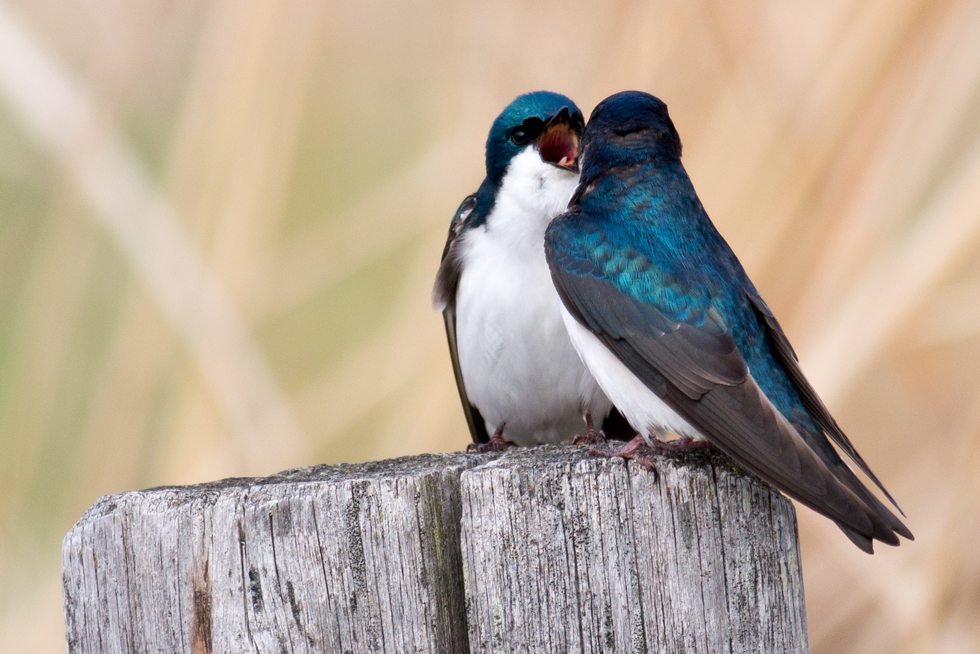
Tree Swallows having some sort of argument.
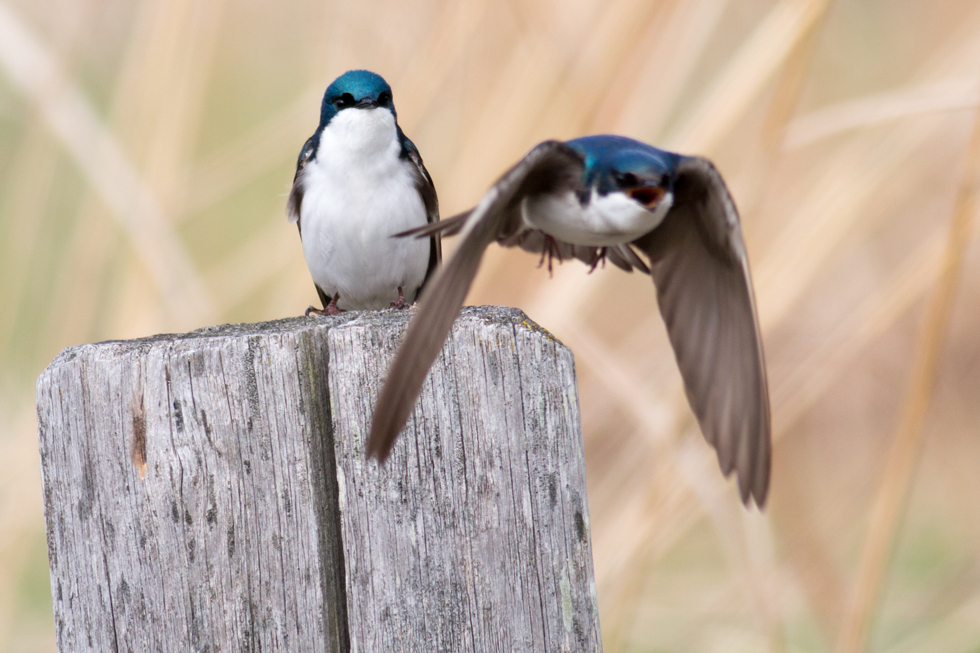
No sense in sticking around and getting yelled at.
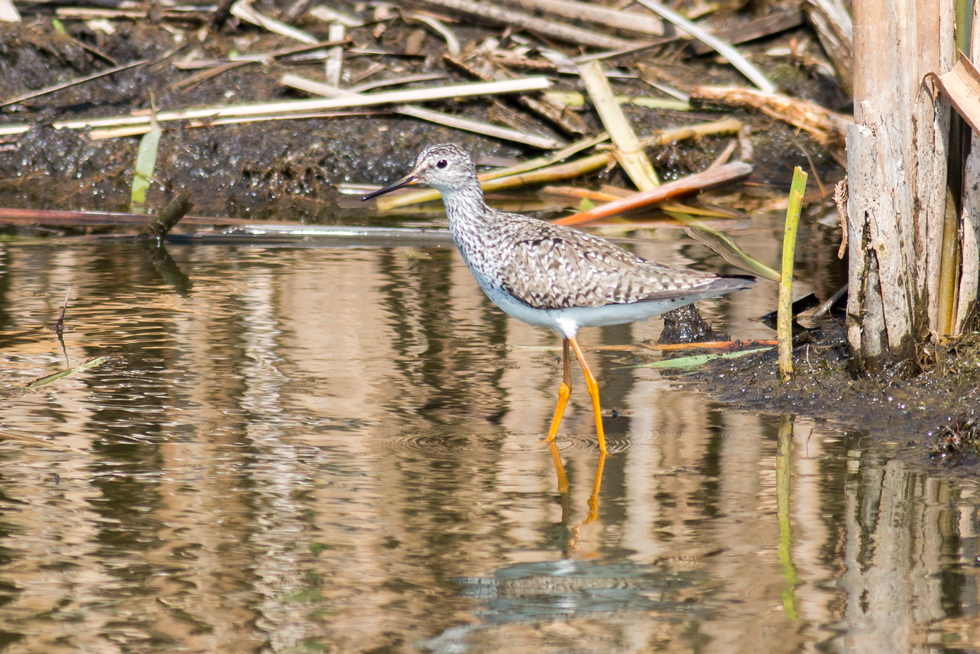
The water was pretty low, compared to last year, exposing mud flats that attracts shorebirds. This is a Lesser Yellowlegs.
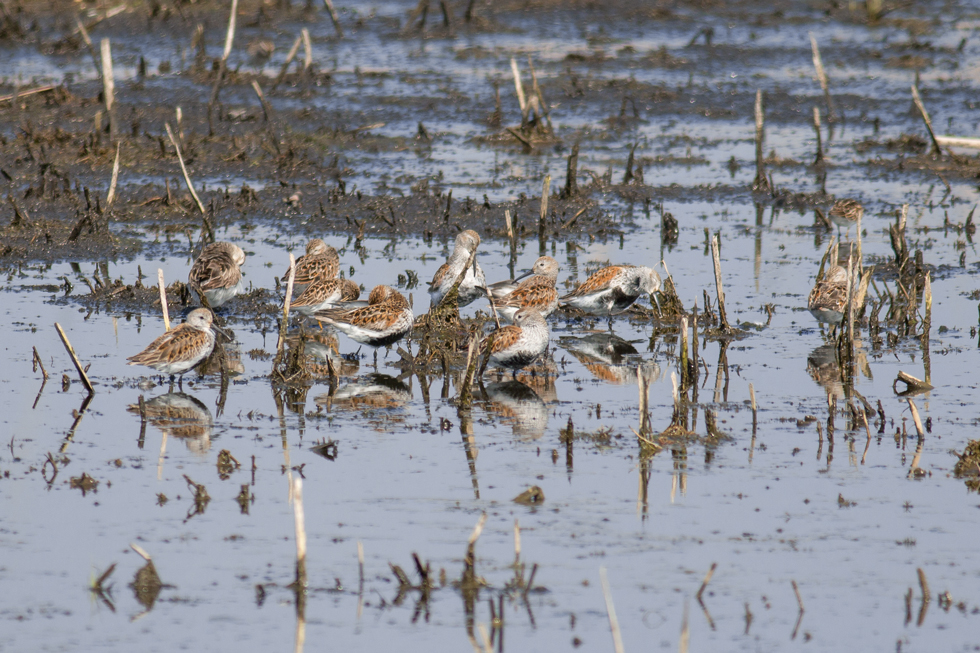
The Dunlin is one of the most common and best-known waders throughout its breeding and wintering ranges. It breeds in Northern Alaska and the Canadian Arctic so they still have quite the trip ahead of them.
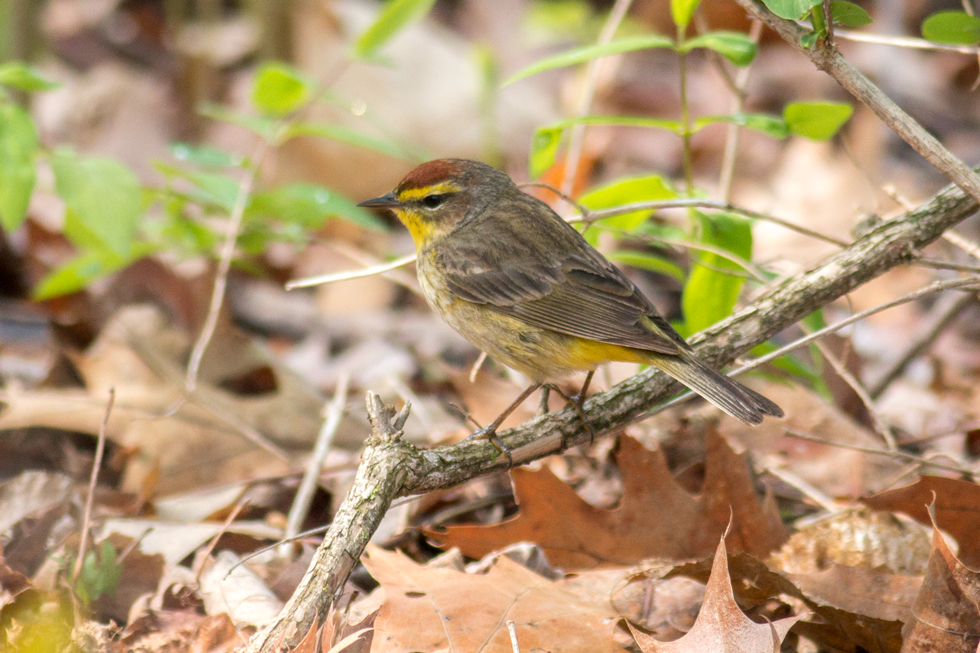
The Palm Warbler is passing through on its way to Canadian breeding grounds. A bird of thickets and open areas, usually seen low or on the ground.
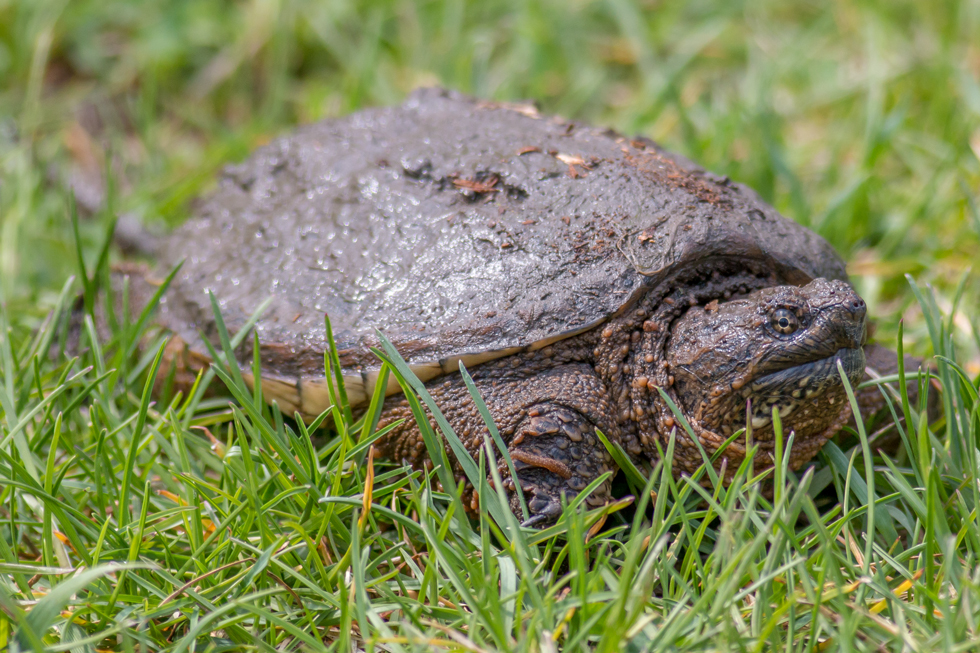
We happened across this baby Snapping Turtle in the middle of a grassy path.
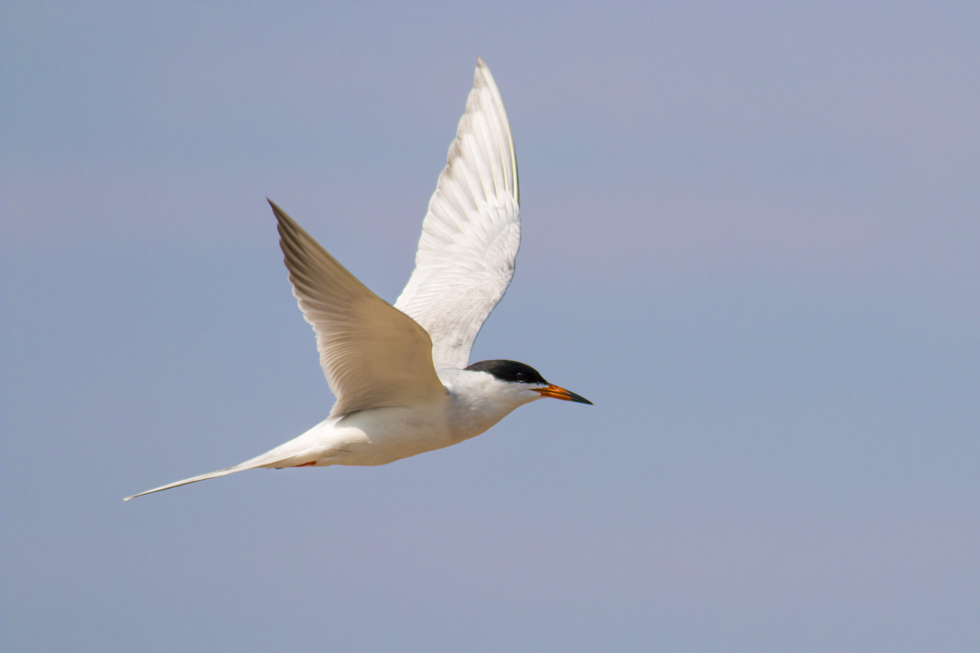
Forster’s Tern. They were diving into a pond and catching minnows. Wish I had a video because they dive headfirst, full-speed into the water, come to a dead stop and somehow take to the wing from the water after a catch.
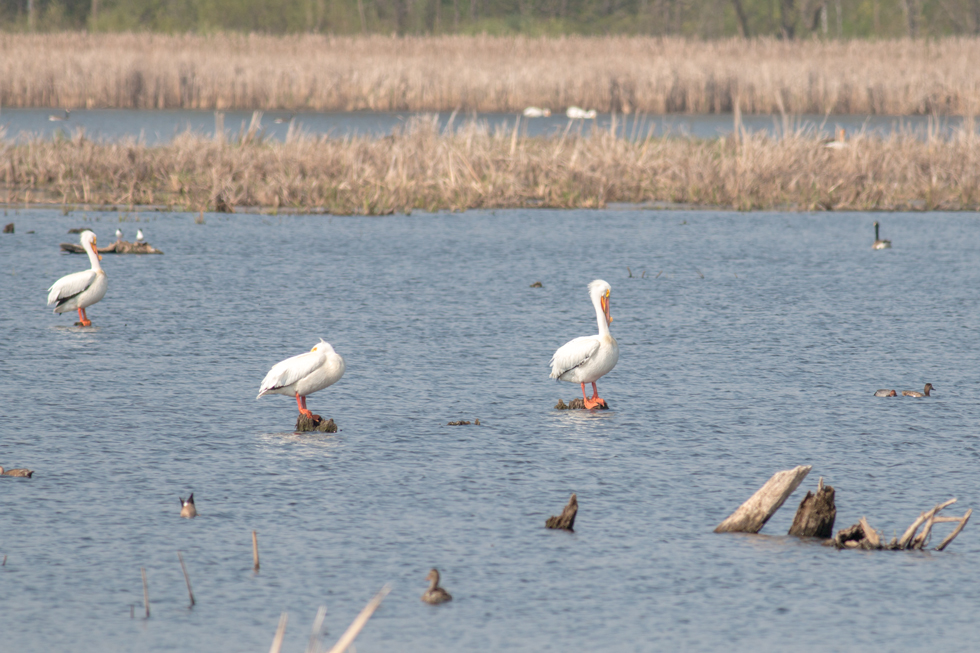
I am always amazed at how big Pelicans are. You really can’t miss them.
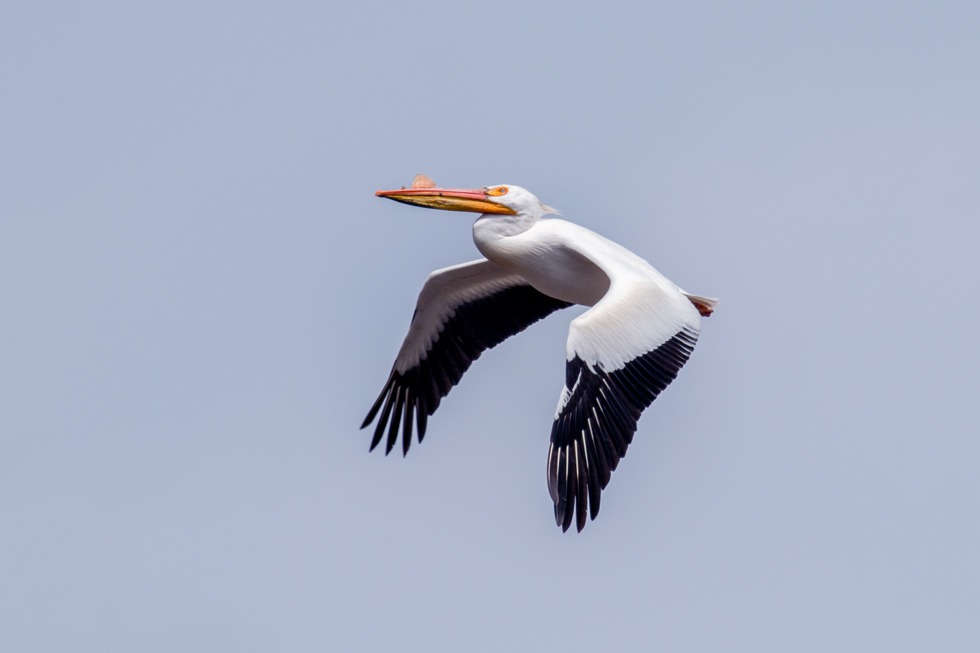
And here is one on the wing.
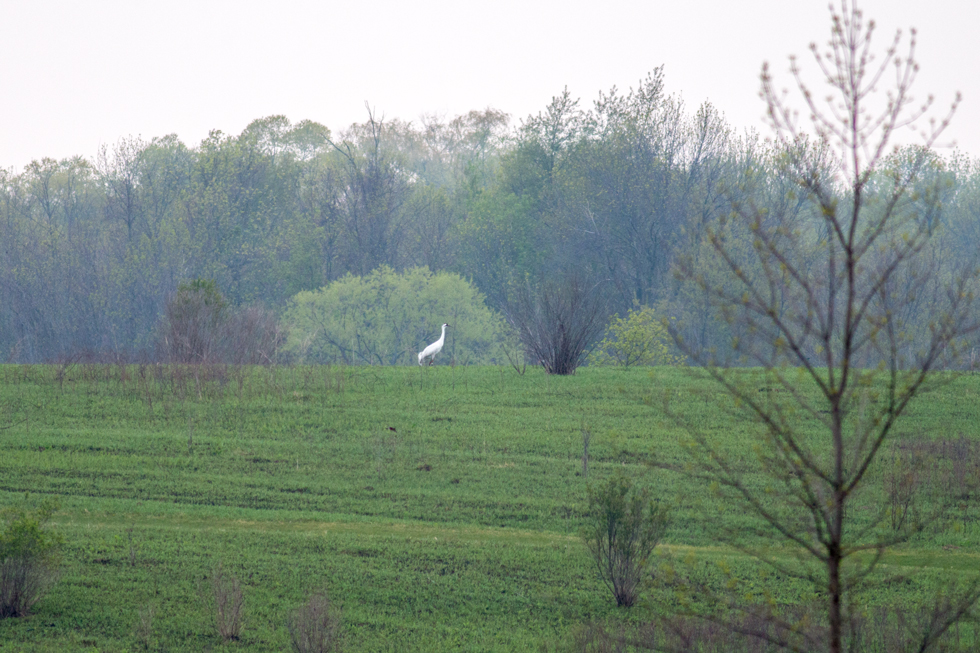
Our first ever sighting of a Whooping Crane. With less, than 200 individuals in the wild, we were pretty lucky to see him. CORRECTION: There are about than 200 PAIRS in the wild, so about 400 individuals. Here is some more information about this particular bird. Another visitor to Horicon talked to a Ranger who identified the bird we saw an “Nougat”.
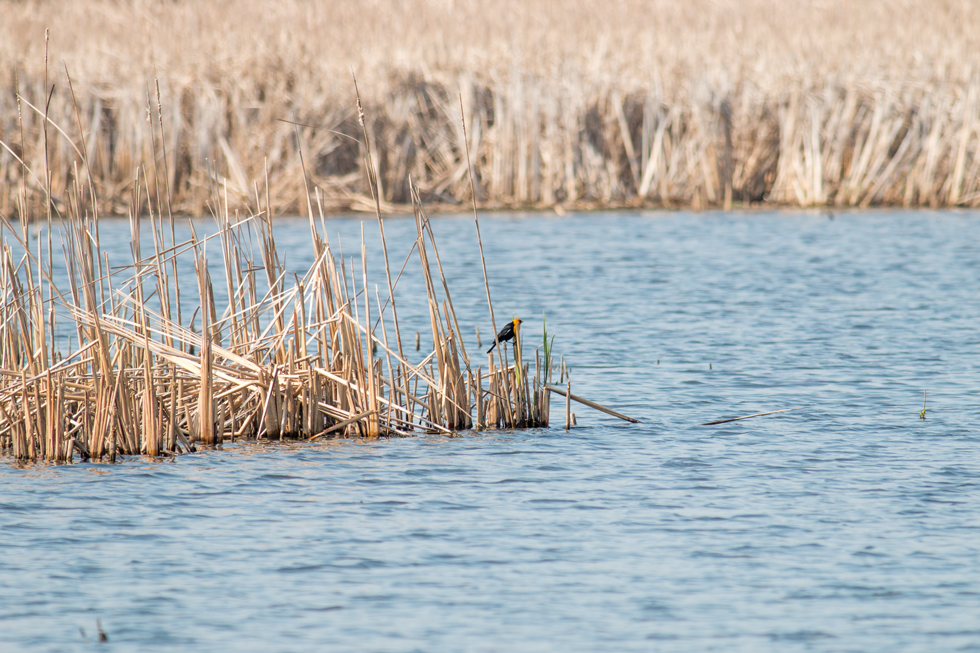
And lastly, a Yellow-headed Blackbird. Not very common and Horicon is one location where you’re pretty much guaranteed to see a few.
thank you! that was such a refreshing morning read. as per the usual, all the photos are A+
You are welcome, adp. I’ve neglected my blog but I’m going to try and post more often.
Love your pics – the arguing birds are great and the Whooper – I really want to see him. Horicon is one of my Favorite places.
Here is some information about the Whooping Crane that we saw at Horicon. Some other visitors had talked to a Ranger at the refuge and were told that he is bird 18-11 and is being monitored for a leg injury, but improving.